

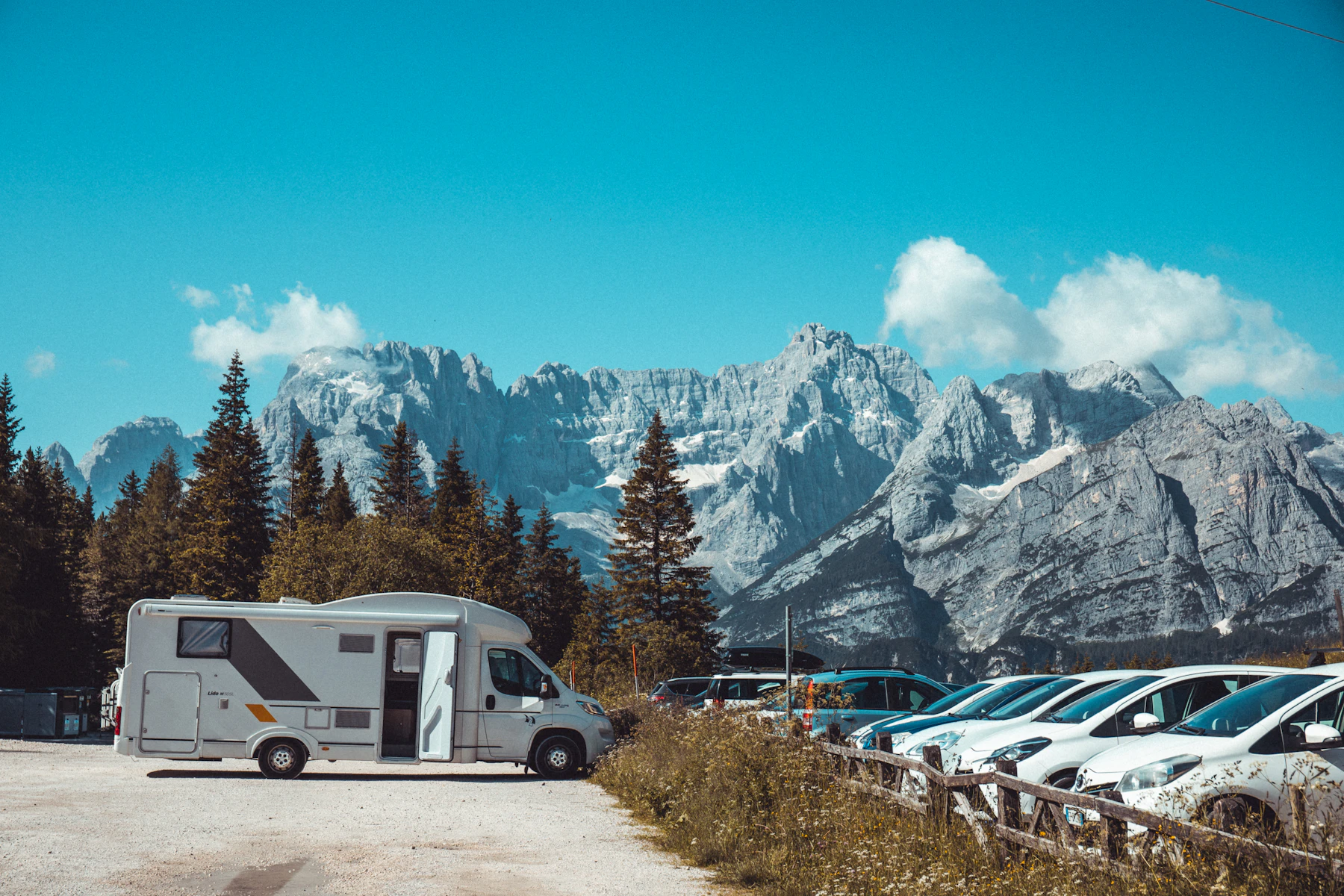
You cannot wild camp in a camper van in Iceland. The Nature Conservation Act (no. 60/2013) makes it illegal to spend the night in a camper van, motorhome, caravan or tent trailer outside organized campsites or urban areas unless the landowner or rightholder has given permission, and the Environment Agency of Iceland (Umhverfisstofnun) publishes the rule in English in almost exactly those words. Verified on ust.is and against the statute on althingi.is on 23 August 2026.
The vehicle rule, precisely
Article 22 of the Act, amended in 2015 (law no. 109/2015), says that outside urban areas you must seek the landowner’s or rightholder’s permission to use tent trailers, folding campers, caravans, motorhomes and similar equipment anywhere other than an organized campsite.
In practice: the gravel pull-off, the trailhead lot, the quiet track down to the shore, all of it is somebody’s land or state land, and none of it is a legal bed for a vehicle. There is no free first night for anything with wheels. That is the single biggest difference from the mainland Nordic countries, where the right to roam at least covers a tent carried away from the road. If your plan was built on the Norwegian model, read how Norway handles motorhomes and then plan Iceland differently.
Inside towns, the Act’s camping article is not the obstacle; local parking rules are, and the posted signs decide.
Tents get a narrow allowance
The same article treats a traditional camping tent more gently. Along public routes in inhabited areas you may pitch for one night on uncultivated land, provided there is no campsite in the vicinity. The Environment Agency states the general limit as no more than three tents, one night, uncultivated ground, unless the landowner has posted a notice to the contrary. Permission is required near farms and houses, on any cultivated land, for more than one night, or for more than three tents.
In uninhabited areas, including the highlands, traditional tents are allowed along public routes on private or state land. That is a walker’s rule. The allowance is written for traditional camping tents, the law’s own words, and your vehicle still needs a legal place to stand for the night either way.
Protected areas override all of it
Where a protected area has its own rules, they beat the general Act, and the big names all have them.
Þingvellir is blunt: camping is only permitted in designated campsites. The park runs four, with Nyrðri-Leirar open year-round and the others, two of them tents only, open 1 June to 15 September. Verified on thingvellir.is on 23 August 2026.
Vatnajökull National Park bans overnight stays outside marked camping areas in several zones, including Jökulsárgljúfur, the protected area at Askja, Kreppulindir and the lowland parts of the southeast. A few high areas allow a tent above 400 meters, and the park asks you to check with it first. Driving is legal only on the roads shown on the park’s own maps. Verified on the park’s travel advice page on 23 August 2026.
So the answer is campsites
Iceland’s campsite network is the whole game for a camper van, and in summer it is dense enough that this costs you little spontaneity. Out of season, openings thin out, so confirm the site is open before you drive an evening on the strength of it. How to pick and use an overnight spot without trouble is covered in the overnight parking guide, and if you are bringing your own van over rather than renting, the crossing is its own planning job: see the ferries guide.
Wherever you end up, the sign at the entrance and a ranger’s instruction beat this page and every other page. How the rest of Europe answers the same question is indexed in the wild camping rules hub, and every framework we have verified is on the rules pages.
Sources
- Where Can You Camp?, Umhverfisstofnun (Environment Agency of Iceland)
- Access Rights, Umhverfisstofnun (Environment Agency of Iceland)
- Lög um náttúruvernd nr. 60/2013 (Nature Conservation Act), Alþingi
- Camping, Þingvellir National Park
- Travel advice, Vatnajökull National Park
When a source is not in English, follow the link for the official wording.